
Aug.03, 2026
Share:
As production scales continue to expand and labor costs keep rising, more and more manufacturing companies are turning to automation to maintain their competitive edge. Whether you’re transporting packaged products, fragile components, or bulk raw materials, the right material handling solution directly impacts production efficiency and corporate profits.
However, simply purchasing a conveyor belt is not enough to create an efficient production layout. To help you better plan your project, we’ve compiled the 10 most frequently asked questions from buyers before investing in a conveyor system.
1. What Is a Conveyor System?
A conveyor system is a mechanized material-handling device used to automatically transport materials, components, or finished products from one location to another within a factory.
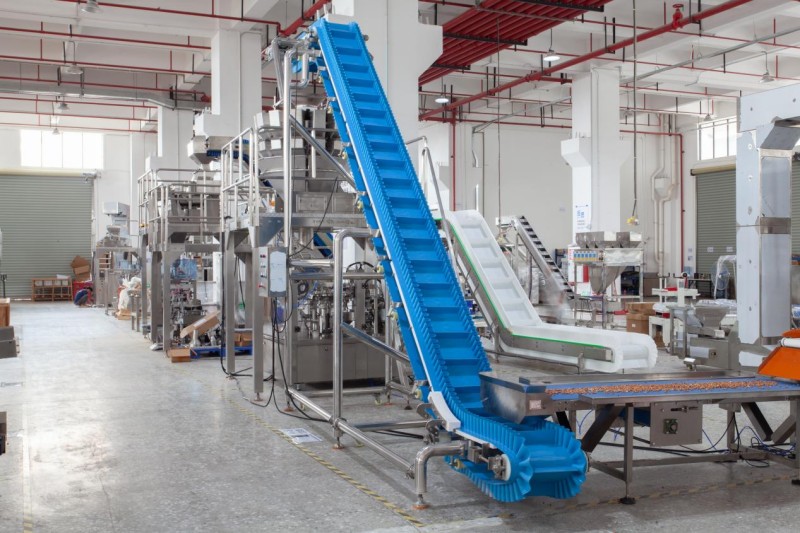
Compared to relying on manual handling or forklift transport, modern factories use conveyor systems to establish continuous, stable, and predictable logistics processes. Depending on the factory layout, a complete conveyor system can handle horizontal transport, inclined transport via incline conveyors, or vertical transport using high-efficiency elevators.
2. Why Do Businesses Invest in Conveyor Automation?
In simple terms,the goal is to improve profitability and expand production capacity. Relying on manual material handling creates severe operational bottlenecks and exposes your business to rising labor costs and injury claims.
A well-designed conveying system can help businesses:
Increase production capacity and ensure continuous, stable production;
Optimize the use of factory floor space;
·Reduce product damage and material spillage during transport;
·Improve workplace safety;
Reduce reliance on manual handling and forklift transport.
3. Horizontal, Inclined, or Vertical: Which Type Do I Need?
There is no "one-size-fits-all" conveyor. Your choice depends entirely on your material characteristics, required throughput, and facility layout. Industrial conveying generally falls into three main categories:
Horizontal Conveyors: The backbone of standard transit, ideal for moving cartons, pallets, or bulk items straight across the factory floor.In addition to cardboard boxes, pallets, and bulk materials, the system handles bagged goods, raw materials, food, grains, animal feed, fruits and vegetables, warehousing, and distribution, as well as turning, speed changes, distance adjustments, and sorting.
Inclined Conveyors: Designed for connecting equipment or floors at different heights, providing a smooth transition from horizontal to vertical.Perfect for bridging elevation gaps between different machines or mezzanine levels without losing floor space.
Bucket Elevators: The ultimate solution for vertical lifting. If you are moving bulk materials, powders, or grains straight up to a packaging hopper, a bucket elevator delivers high volume while maintaining a remarkably small footprint.
4. How Do Conveyors Improve Plant Productivity?
Conveyors transform batch processing into a continuous, synchronized workflow. Instead of workers waiting for the next pallet to arrive, materials are delivered to workstations precisely when needed.
By integrating horizontal conveyors with specialized lifting equipment, you eliminate dead time, Shorten the production cycle, and allow your skilled operators to focus on quality control and technical tasks rather than heavy lifting.
5. Are Modern Conveyor Systems Safe to Operate?
Yes, provided they are engineered to modern industrial standards. Reliable conveyor systems do more than just move—they protect your team.
When reviewing a system design, look for critical safety integrations such as accessible emergency pull-cords, emergency stop buttons, mechanical guards over pinch points, and automated sensor shut-offs. Implementing these features drastically reduces the risk of workplace injuries and protects your business from costly liability.
6. What Are the Real-World Maintenance Requirements?
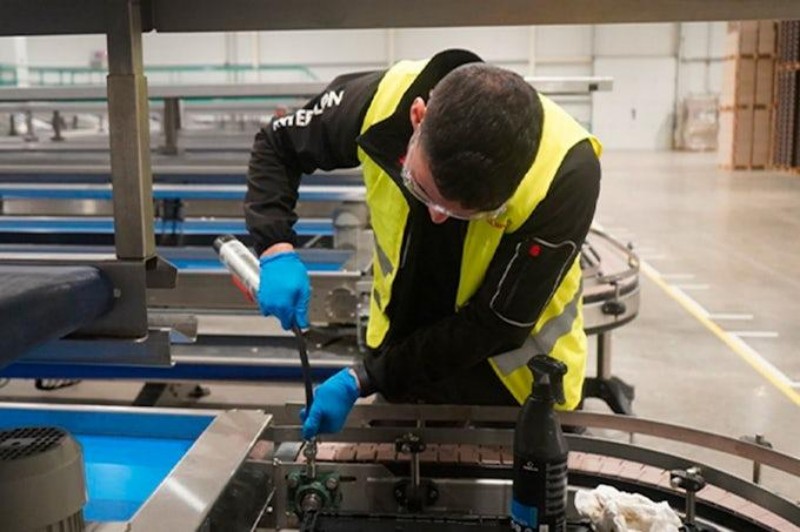
Like any industrial machinery, conveyors require regular attention to prevent unplanned downtime. However, a simple preventative maintenance routine keeps things running smoothly.
Your maintenance team should focus on:
Catching a worn bearing during a scheduled weekend inspection is vastly cheaper than halting your entire production line during a peak shift.
7. Can One System Handle Different Types of Materials?
This depends on the system design. During the design phase, we will tailor a solution to meet your specific needs, taking into account factors such as the state of the material (granules, powder, bagged, boxed, raw materials, etc.); the type of conveyor (horizontal, elevating, transfer, etc.); production capacity; production processes; and plant layout. We will combine our expertise with your actual production conditions and requirements to develop a solution uniquely tailored to your needs.
If you are handling loose solids or agricultural products, a heavy-duty bucket elevator ensures materials are lifted gently without spilling. If you are moving packed boxes, a standard belt or roller conveyor is more appropriate. The key is sharing your exact material specifications with your supplier upfront.
8. How Do I Solve Floor Space Constraints?
This is one of the biggest challenges in modern manufacturing. When floor space is limited, you cannot afford long, gradual incline ramps.
To solve this, smart facilities look upward. By utilizing steep inclined conveyors or compact vertical bucket elevators, you can transport materials straight up to ceilings or mezzanine levels. This frees up valuable floor space for actual production machinery and assembly stations.
9. What Information Should I Gather Before Requesting a Quote?
To get an accurate engineering proposal and quote, you should provide your supplier with specific operational data:
10. Is a customized conveying solution worth the investment?
While standard, off-the-shelf conveyor sections might work for a simple straight line, complex material handling usually demands custom engineering.
A tailored system—engineered with the precise mix of horizontal, inclined, and vertical conveying technologies—ensures seamless integration with your existing machinery. While the initial investment may be higher, a custom system delivers significantly lower total cost of ownership (TCO) by minimizing product spillage, reducing maintenance headaches, and maximizing daily output.
Investing in a conveyor system is not just an equipment purchase; it is a long-term strategy to scale your business, cut labor dependencies, and boost operational safety.
Whether you need to transport materials vertically using high-efficiency elevators, connect different workstations with incline conveyors, or optimize your production layout with horizontal conveyors, our professional conveying solutions can help you achieve more efficient material flow.
Contact our engineering team to get a customized conveying solution tailored to your production needs.